

As the Midwest shakes off winter’s chill and sunny days beckon, it’s time to transform your pool from a dormant relic into a summer centerpiece. Pool opening here isn’t just a task—it’s a rite of passage, shaped by unpredictable spring weather and the debris those windy plains love to scatter. With the right steps, you’ll be ready for cannonballs and laughter in no time.
At Legacy Backyards, we specialize in fiberglass pools, vinyl liner installations, and full backyard upgrades across Lincoln and Central Illinois. Many of our clients use advanced systems like salt chlorine generators, ClearComfort sanitizing systems, automatic safety covers, winter mesh covers, Jandy pumps/filters/heaters, and Jandy or Poolside Tech automation. Here’s our step-by-step guide with tailored tips to make your spring pool opening smooth and successful.
Prepare and remove your winter cover
Your cover protected the pool all winter—now handle it carefully to avoid dumping debris into the water.
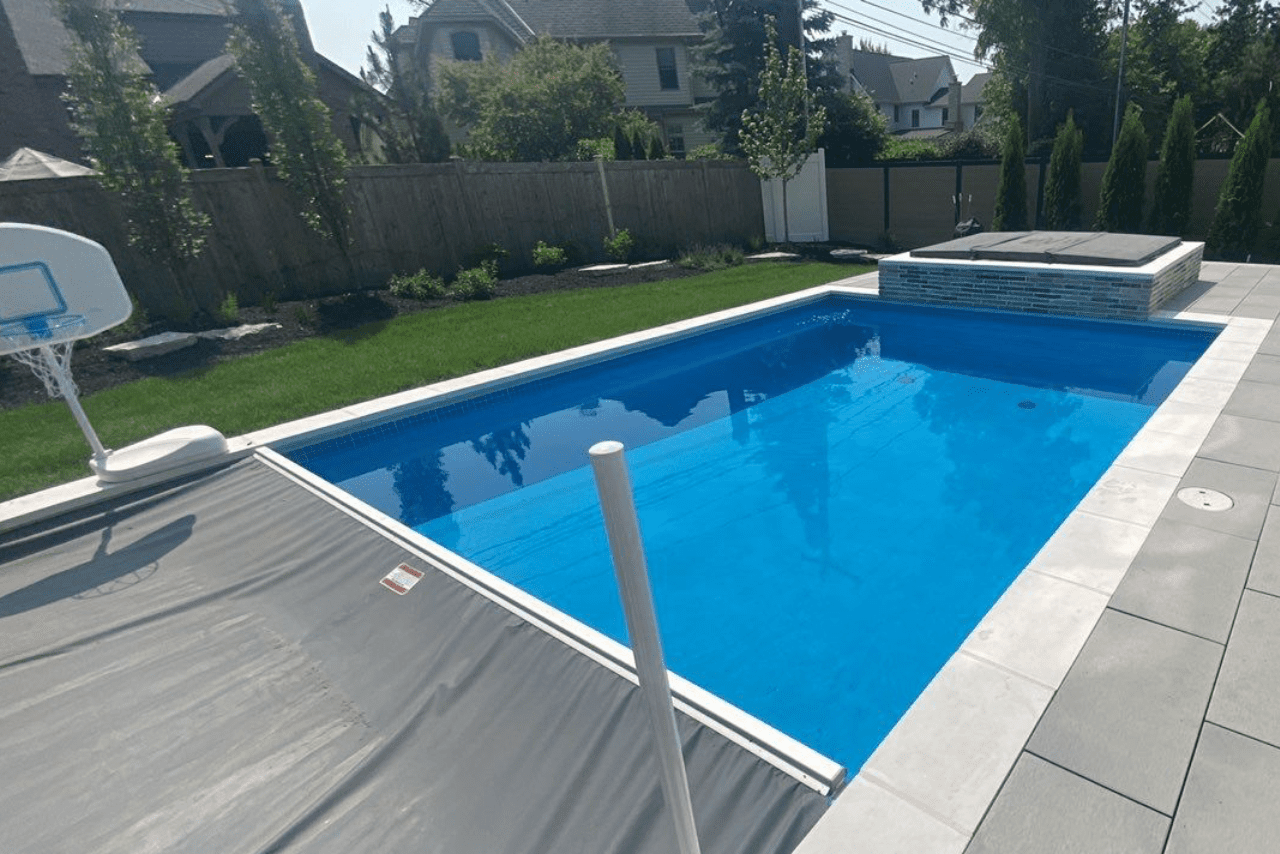
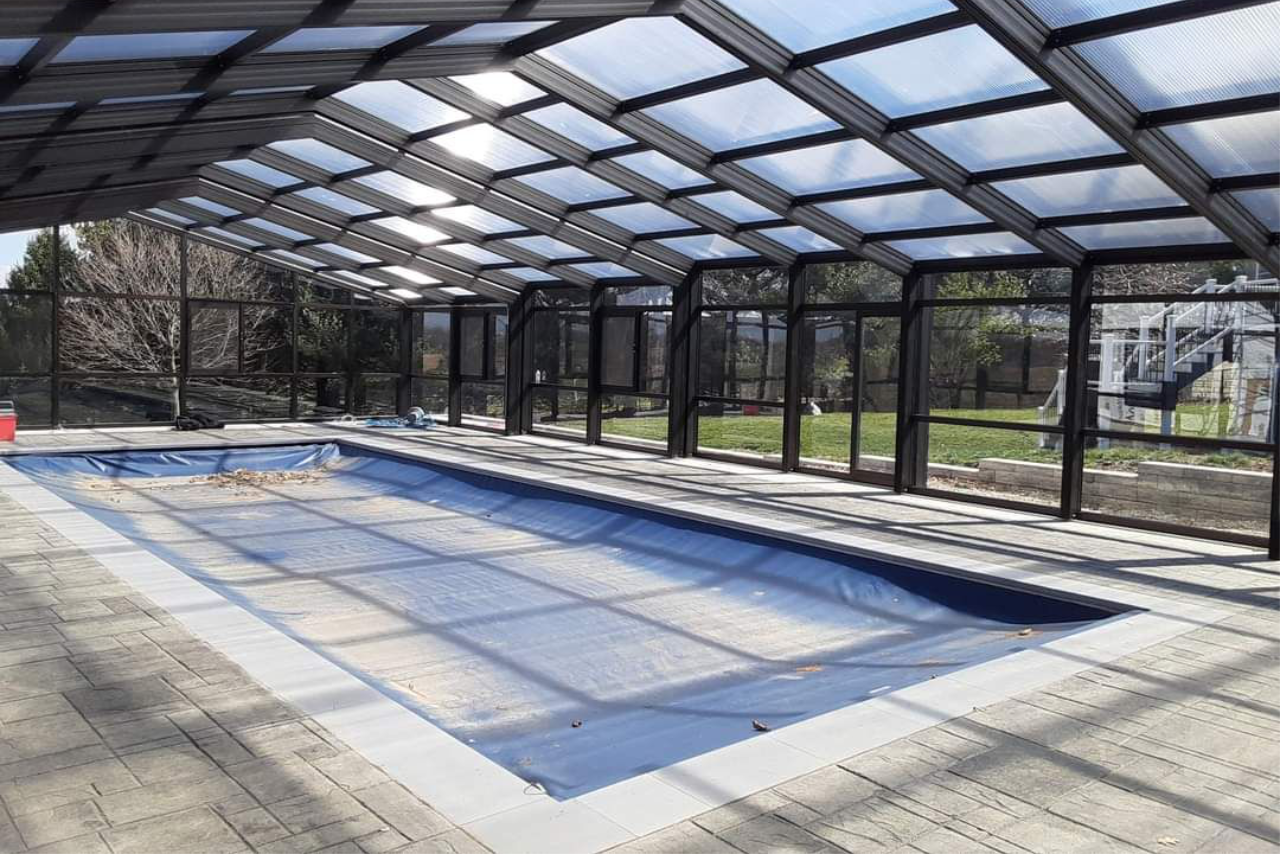
- For automatic safety covers: Clear leaves, twigs, and standing water from the top first. Use your cover pump if needed. Then, simply use the keypad or switch to open the cover (it usually takes just 15–30 seconds). Inspect the tracks, ropes, and motor for any winter damage. Test it a few times to ensure smooth operation.
- For winter mesh safety covers: These allow some water and light through, so you may see more algae or debris buildup underneath. Remove as much standing water and debris as possible before taking it off. Clean the cover thoroughly with a mild soap solution, let it dry completely, and store it properly to prevent mold or tears.
Pro Tip: Open your pool before heavy pollen season hits in Central Illinois to minimize green water surprises. If using a mesh cover, consider running the filtration system (with plugs removed from returns if safe) before fully removing the cover to get a head start on clearing the water.
Inspect the Pool Equipment & Pool
Our harsh Illinois winters can leave pumps, filters, and lines with cracks or leaks, so check and reassemble anything you winterized. Place your plugs, gizmos, and any other winterizig devices away in a place you can easily find for next pool closing. Reinstall any inlet our outlet eyeballs and all plugs for your equipment. Don’t forget to install the pump basket and skimmer basket. Make sure valves and filter are set to run, then prime and turn the pump on. Skim off twigs and bugs, then fill the pool just above the skimmer’s midpoint. We are wanting the waterline to be a little higher than usual to clean the waterline. You’ll backwash or discharge later to hit the perfect level. Monitor your filter pressure.
- Jandy pumps, filters, and heaters: Inspect for leaks, clean or replace filter cartridges/elements, and check O-rings and valves. Lubricate where needed. Test the pump for proper operation and listen for unusual noises.
- Jandy TruClear Salt-Chlorine Generator: Clean the salt cell if it was removed or stored. You’ll add salt later once water chemistry is balanced—don’t turn it on too early.
- ClearComfort sanitizing system (AOP – Advanced Oxidation Process): Check the blue air tubing and air check valve connections. The system powers on with the pump and works best once water is circulating. It significantly reduces chlorine needs while providing powerful oxidation against bacteria and viruses.
- Jandy or Poolside Tech automation: Power up your system and verify all components (pumps, valves, heater, lights, and chemistry monitoring). Poolside Tech’s Attendant offers smart, brand-agnostic control with real-time alerts for water chemistry, temperature, and equipment status—making maintenance much easier. Update any schedules for spring operation and test remote access via the app.
Run the system briefly (without full circulation if needed) to check for leaks or issues before proceeding.

Pool opening Kits
A pool opening kit contains all the chemicals pool owners will need for their spring openings. Opening kits usually include the following:
Test Strips
Algaecide
Multi-Purpose Pool Shock
Non-Chlorine Shock
Balance your water chemistry
Poor chemistry is the #1 reason pools turn green in spring. Test your water thoroughly (use a reliable test kit or bring a sample to your local pool professional).
Key targets:
- pH: 7.4–7.6
- Total alkalinity: 80–120 ppm
- Calcium hardness: 200–400 ppm (important for fiberglass and heaters)
- Cyanuric acid (stabilizer): Appropriate level for your salt system
For salt systems:
- Add the correct amount of salt after initial balancing (follow your generator’s guidelines—typically 3,000–4,000 ppm).
- Shock the pool with a non-chlorine or liquid chlorine shock first, then turn on the salt cell once levels stabilize. Salt systems produce chlorine gently, so avoid over-shocking.
For ClearComfort AOP users:
- You’ll still shock and balance, but the system’s hydroxyl radicals reduce overall chlorine demand and fight chlorine-resistant contaminants. Keep the system running with the pump for best results.
Add a quality algaecide (metal based helps alot, but too much metal in the water can be a bad thing) as a preventative, especially after a mesh cover winter. Run the filter 24/7 until the water is clear, then switch to normal schedules via your automation system. Be sure to check filter pressure, and backwash or clean the cartridges accordingly.
Clean and Vacuum the pool
- Skim the surface and empty skimmer/pump baskets.
- Vacuum the floor and walls (manual or automatic cleaner).
- Brush all surfaces to remove any algae or scale.
Your Jandy filter will do the heavy lifting once running—backwash or clean as needed during the process.
Test the water again and set schedules
- Fire up your Jandy heater and confirm it reaches the desired temperature.
- Test automation features: lighting, water features, pumps, and chemistry monitoring.
- With Poolside Tech or Jandy automation, program energy-efficient schedules (e.g., variable speed pump settings) to save on electricity while keeping water pristine.
Timing matters in the Midwest—target late April to early May when temps consistently top 70°F. Too early risks frost; too late invites algae. Test your water one last time to confirm it’s crystal-clear and chlorine-stable. Not sure? Bring a sample to P&W Pool and Spa in Lincoln, IL (217-735-3309) for expert analysis—Legacy Backyards partners with pros to ensure your pool shines. Now, picture this: you’re on a chaise lounger, eyes closed, listening to your kids splash and giggle. That’s the Midwest summer legacy we’re here to build.
With a little education, Pool Openings Can Be A Breeze!
Not every pool is alike! City water and well water have as much difference in composition as you can imagine. Getting a proper test kit can help solve issues if you’re still green.
When is the best time to open my pool in central Illinois?
We recommend opening your pool in mid to late-April, or as soon as consistent daytime highs reach the mid-60s°F. Opening early helps prevent heavy algae growth and pollen buildup in cooler spring weather, making it easier to balance the water. Some owners open as early as late March in warmer years, while others wait until closer to May 1st if temperatures are cooler. The key is to avoid waiting too long, as warmer water later in spring can lead to more challenging cleanups.
I'm having trouble, is my filter the problem?
1st, chlorine demand varies with each pool. Get it tested at P&W Pool. and Spa in Lincoln, IL or another local pool chemical supply company to determine how much chlorine you will need to overcome the pool’s chlorine demand. Sand filters down to 40 micron, Cartridge down to 20 micron, and DE is 10 micron. Sand filter laterals can break and will be hard to detect if the water is dark and dirty. Ensure your sand filter is holding pressure. DE filters can bust a hole – also hard to determine if you can’t see the bottom. Ensure DE filter pressure is normal. A higher filter pressure is ideal and makes sure you’re filtering out smaller debris. As the filter gets clogged, it becomes a better filter. Once the filter is above 10lbs of pressure above it’s normal operating pressure, give it a backwash. Cartridge filters need cleaned. Always replace with a dry cartridge – just like your pants, the holes in the pleats of the fabric will shrink like your pants after they’ve been through the drier.
Should I open my pool myself or hire a professional service?
Many central Illinois pool owners hire professionals for the opening, especially for inground pools, to ensure proper equipment inspection, plumbing connections, and initial water treatment. DIY is common for above-ground pools or experienced owners, but pros can save time and help avoid costly mistakes like improper chemical addition or equipment damage from winter freezing. Services often include cover removal, debris cleanup, system startup, and an initial shock treatment. Weekly visits can also help during spring cleanup to ensure chemical balance to help you get swimming faster.
Can pool automation systems help during spring pool opening in central Illinois?
Yes, pool automation systems can be very helpful during and especially right after spring opening, though they don’t eliminate the initial physical work.
Here’s how automation supports the spring startup process for pools in central Illinois:
- Faster and more consistent water circulation — Once you’ve removed the cover, cleaned debris, reinstalled equipment, and filled the pool, automation lets you immediately program your variable-speed pump for optimal run times. This improves filtration and helps clear pollen, dust, and early algae faster than manual timers — important in central Illinois where spring pollen can be heavy and temperatures fluctuate.
- Remote startup and monitoring — Systems like Jandy Aqualink or Pool Side Tech’s Attendant allow you to turn on the pump, check system status, and make adjustments from your smartphone without needing to be poolside constantly. This is convenient if you open the pool yourself or want to monitor progress while the water stabilizes.
- Built-in freeze protection — Central Illinois springs can still bring surprisingly cold nights. Automation automatically activates the pump or heater if temperatures drop, protecting pipes and equipment from freeze damage during the vulnerable opening period.
- Better early-season chemistry management — Advanced systems with sensors can monitor and help maintain pH and sanitizer levels more consistently once you’ve done the initial shocking and balancing. This reduces the wild swings common in the first 1–2 weeks after opening.
- Energy efficiency from day one — You can schedule the pump to run during off-peak electricity hours right away, saving money compared to running it 24/7 manually.
Key limitation: Automation does not replace the hands-on steps of spring opening — removing and cleaning the cover, inspecting/reinstalling equipment, brushing surfaces, vacuuming, initial water testing, shocking, and chemical balancing. Those still need to be done manually or by a professional service. Think of automation as driving assist and always keep your hand on the wheel!
Best time to add or upgrade automation: Spring opening is an excellent opportunity. Many local companies in the Peoria, Springfield, Bloomington, and Champaign areas can install or integrate automation while the pool is already open and accessible. As always, our sister company, P&W Pool and Spa is always a phone call away (217) 735-3309.
Overall, if you want less daily hassle, more precise control, and better protection against unpredictable Midwest weather, automation pays off quickly when paired with a variable-speed pump.








Recent Comments