
How to run the cover pump so melt and rain don’t sit on an automatic safety cover all winter.
Written by the crew at Legacy Backyards in Lincoln. [NEEDS INFO: author name and credentials, or who on the team should be named as the reviewer.]
The cover pump's job in winter is simple. It takes rain and snowmelt off the top of a closed automatic safety cover so the fabric isn't holding a heavy puddle. Keep the pump on the cover the way your manufacturer tells you to. Plug it into a GFCI-protected outlet if that's how the unit is designed. Keep the discharge hose clear. Never run the automatic cover while water, snow, or ice is on it. Don't chip ice off the cover. Check your cover manufacturer's instructions. Brands differ, and winter use may not be covered by the warranty.
This is general guidance for homeowners around here. We cite one published manufacturer winter guide (Coverstar) as an example. It is not a substitute for the manual that came with your cover.
Related reading: closing, winter care, and automatic vs. mesh vs. solid covers.

What the pump is actually for
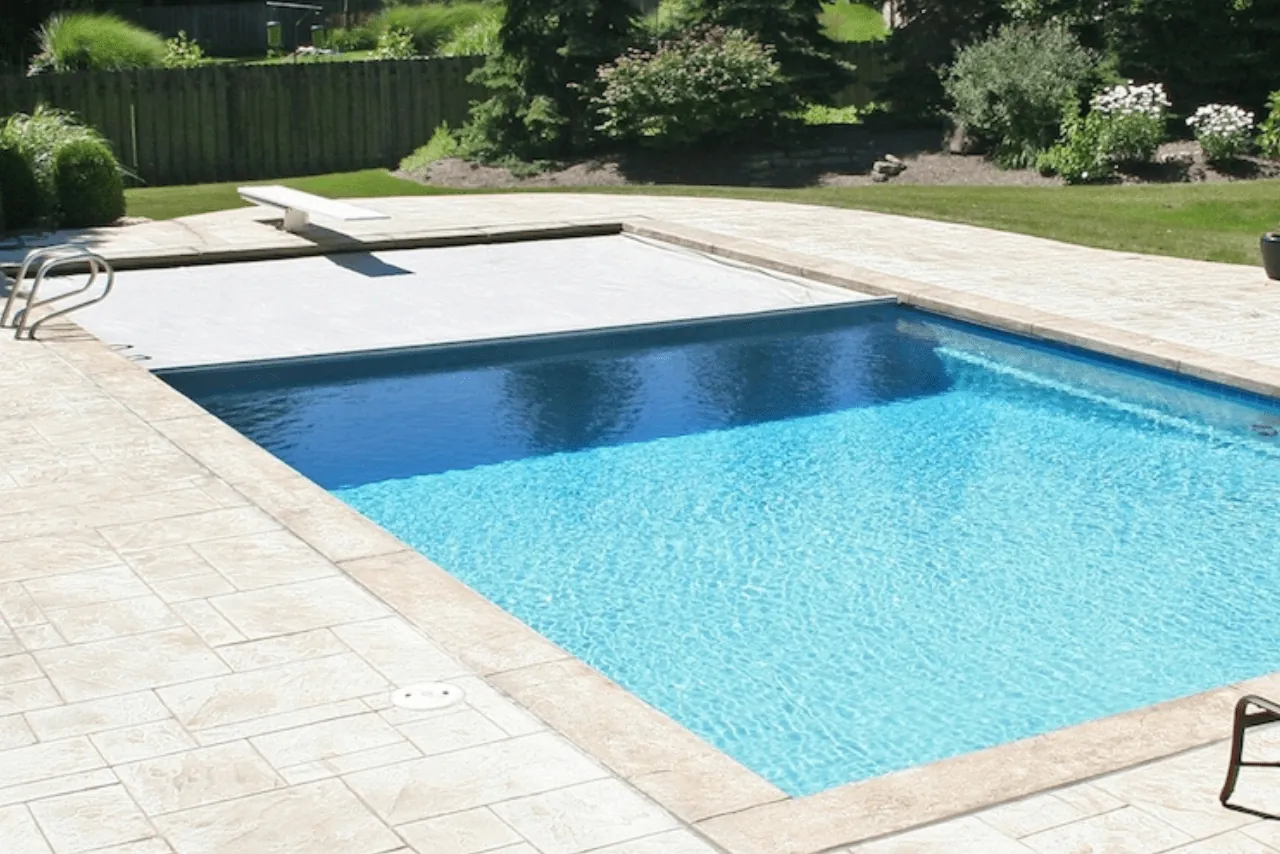
An automatic safety cover sits tight over the pool. Rain, snowmelt, and debris collect on top. That water is heavy. Left alone, it can sag the fabric and strain the tracks or the leading edge. If the water in the pool underneath also drops, you can end up with real damage.
The pump moves that water off the cover and discharges it somewhere safe. It is not a substitute for closing the pool correctly, and it is not meant to de-ice the cover by force.
How we like to see it set up
Follow the pump and cover manuals first. In general:
- Set the pump in the low spot where water collects on the closed cover.
- Use a GFCI-protected outdoor outlet if the pump is made to plug in that way.
- Run the discharge hose somewhere the water won't flood a foundation, a neighbor, or back onto the cover.
- Keep the hose as straight as you can. A kink stops the pump from doing any good.
- Keep leaves and twigs away from the intake.
Look at the setup at closing, and again after the first real storm.
When it should run
Many cover pumps use a float or a sensor and only run when water has collected. Some you run by hand. If yours is automatic, still confirm it actually runs. A stuck float, a tripped GFCI, or a frozen hose can leave a pond on the cover during a January thaw. We get those thaws here. That's often when people find out the pump hasn't been working.
[NEEDS INFO: if we standardize on a cover brand or a cover-pump model, name it here after you confirm it, and note any instructions we give at pool school. A short, approved example of a winter pump call (no address) would help, if you have one you're willing to share.]
Freeze, ice, and snow
This is the part that catches people.
Monitor the pump and the discharge hose when it's been below freezing. Ice in the hose will stop the discharge even if the pump tries to run.
Do not smash ice off the cover or the tracks to "help" the pump. Coverstar's winter guide, for example, warns that trying to break and remove snow or ice can damage the cover and the guides.
Do not operate the automatic cover if there's water, snow, or ice on it, or if the pool water is low. Let the meltwater pump off first.
Some pump makers describe what to do if the pump itself ices in place. That's manufacturer-specific. Don't force a frozen pump to spin. Check the pump manual. If you need to, wait for a thaw or call someone.
We are not going to tell you "it's always fine if the pump freezes solid." If your manual says something specific, follow that.
The water level in the pool
The water under the cover supports the load above it. If you drop the level too far at closing, or the pool loses water later, the cover can get pulled in ways it wasn't designed for.
Coverstar's winter use guide tells owners not to lower the water more than 5 inches from normal operating level, to hold at least that level whenever the cover is closed, and to understand that leaks or holes that drop the level can damage guides and fabric. They also say using the automatic cover as a winter cover is a personal choice, they're neutral on that choice, and damage from winter use is generally not in the warranty. Other brands may differ. Read yours.
What not to do
Don't run the cover motor to "dump" a puddle into the pool. Don't use a sharp shovel or an ice chisel on the fabric. Don't store equipment or decorations on the closed cover. Don't walk on it unless your manufacturer allows it. And if you can help it, don't aim the discharge where it will sheet ice across a walk or the driveway.
When to call
Call if the pump won't run, the cover is holding a deep pond, the fabric or tracks look distorted, you think the pool is losing water, or a storm dropped debris you can't safely remove. [NEEDS INFO: who should get that call, Legacy, P&W, or a cover-service partner.]
If you're designing a new pool, talk about an automatic cover and a plan for winter pumping in the first conversation. In this climate, that belongs in the design, not in a December panic.
FAQs
Do I leave the cover pump on the cover all winter?
That's the usual manufacturer direction when an automatic cover is used as a winter cover: the pump stays on the cover to remove water as it collects. Confirm it in your manual.
Can I open the cover if there's ice on it?
No. Wait until the water, snow, or ice is off the fabric. That's a standard manufacturer warning.
What if the discharge hose freezes?
A frozen hose can't discharge water. Clear or thaw it without damaging the cover. Don't chip at the fabric to get there. Call if you can't do that safely.
Does using the automatic cover in winter void the warranty?
It can affect coverage. Coverstar, for example, says the cover is not warranted against damage due to winter use. Check your own warranty language.
