
What to watch once the pool is closed, and when a mid-winter look is worth a call.
Written by the crew at Legacy Backyards in Lincoln. [NEEDS INFO: author name and credentials, or who on the team should be named as the reviewer.]
A properly closed pool should sit quietly through a Central Illinois winter. It is not something you can forget about until April. Check the cover. Get the leaves off. Pump standing water off a solid or automatic cover. Watch the water level underneath. Leave the ice alone. Don't chip it off the fabric. After a midwinter thaw, go look again. And don't start the equipment you already winterized unless someone who knows that pad has told you to.
This assumes the pool is already closed. For the close itself, see how we close a pool. For automatic covers, see the cover pump. For spring, see opening.
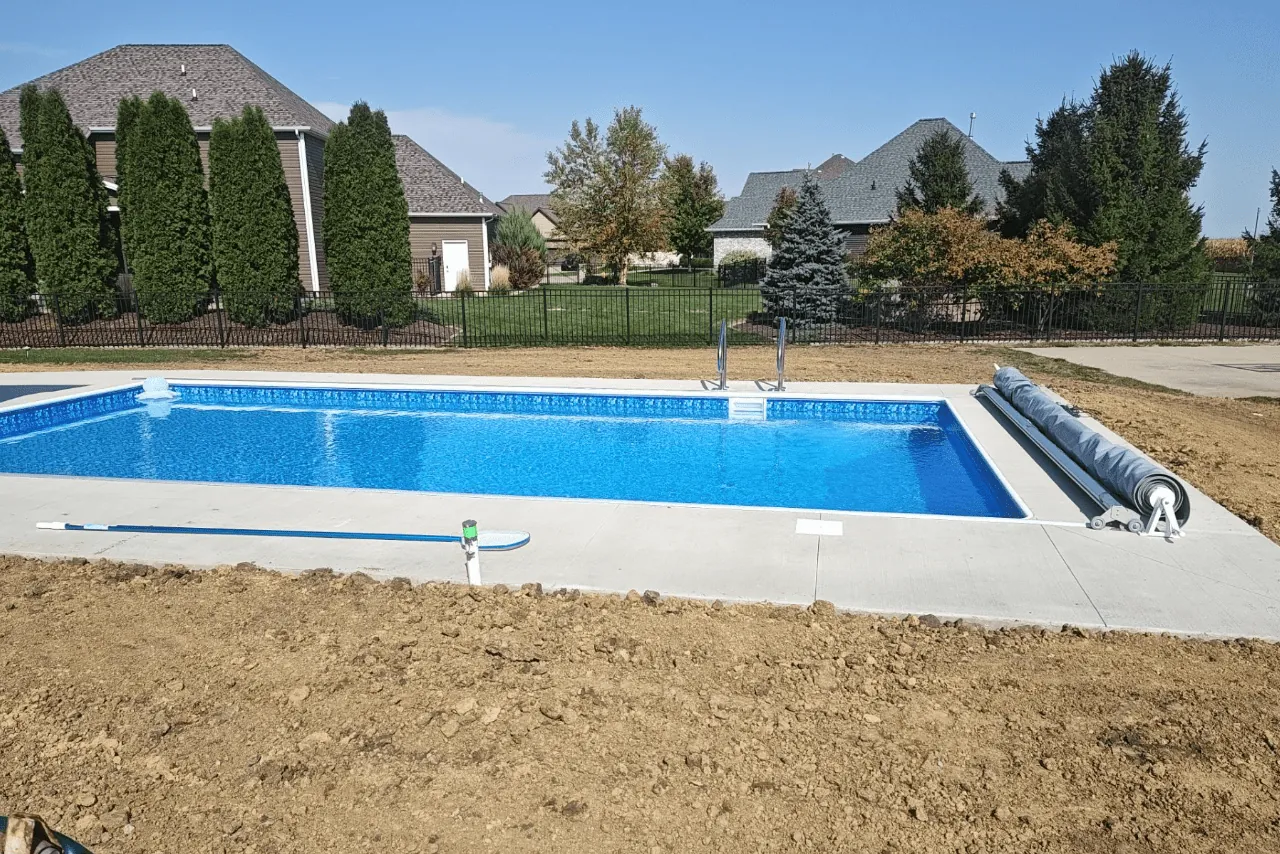

A closed pool still needs a look
Our winters are not one long freeze. Snow, rain, and sudden thaws all put weight and water on a cover. Leaves that sit there can stain the fabric and add weight. The usual problems are a cover sagging into the pool, a pump that has quit, or a water level that has dropped. Those are easier to catch early.
You don't need a daily ritual. Walk it after a real storm, and again during a long thaw.
The cover and standing water
Keep leaves and branches off. Take them off. Don't shove a heavy pile into the middle.
On a solid safety cover or an automatic cover, pump the standing water off. That's what the cover pump is for. Keep the discharge hose unkinked and aimed where the water can drain away from the pool and the house. If the hose is kinked under a leaf pile, the pump is just sitting there looking useful.
On a mesh safety cover, water can pass through, so you won't "pump the cover dry" the same way. You still need to get the debris off and keep the cover tight on its anchors.
Check your cover manufacturer's instructions before you stand on it or put tools on it.
The water under the cover
If the water under an automatic cover drops too far, the cover can lose the support the manufacturer counted on, especially with snow or ice on top. Coverstar, as one example, tells owners not to let the level fall more than 5 inches below normal operating level while the cover is closed, and warns that a dropping level can pull on the guides. That figure is brand-specific. Use the number in your manual.
If you think the pool is leaking, or the cover is stretching downward in a way it wasn't at closing, call a professional. Don't add or drain water by guesswork.
Ice, snow, and the thaw in the middle of winter
Don't chip, chop, or shovel ice off an automatic or safety cover. Manufacturer winter guides commonly warn that this can damage the fabric and the tracks or anchors. Let snowmelt and a working cover pump do the work, if that's how the system is designed. Don't operate an automatic cover with water, snow, or ice on it. Don't treat the cover as a skating rink or a place to store firewood.
A freeze after a thaw is normal here. The goal is not a bone-dry cover in January. It's to keep a deep, heavy puddle from sitting there, and to avoid forcing ice off the material.
The pad and the fence
The pad should stay winterized. Leave the drain plugs out if that's how it was closed. Don't refill and bump a pump "just to check it" on a 40-degree afternoon unless someone who knows the system has said that's safe.
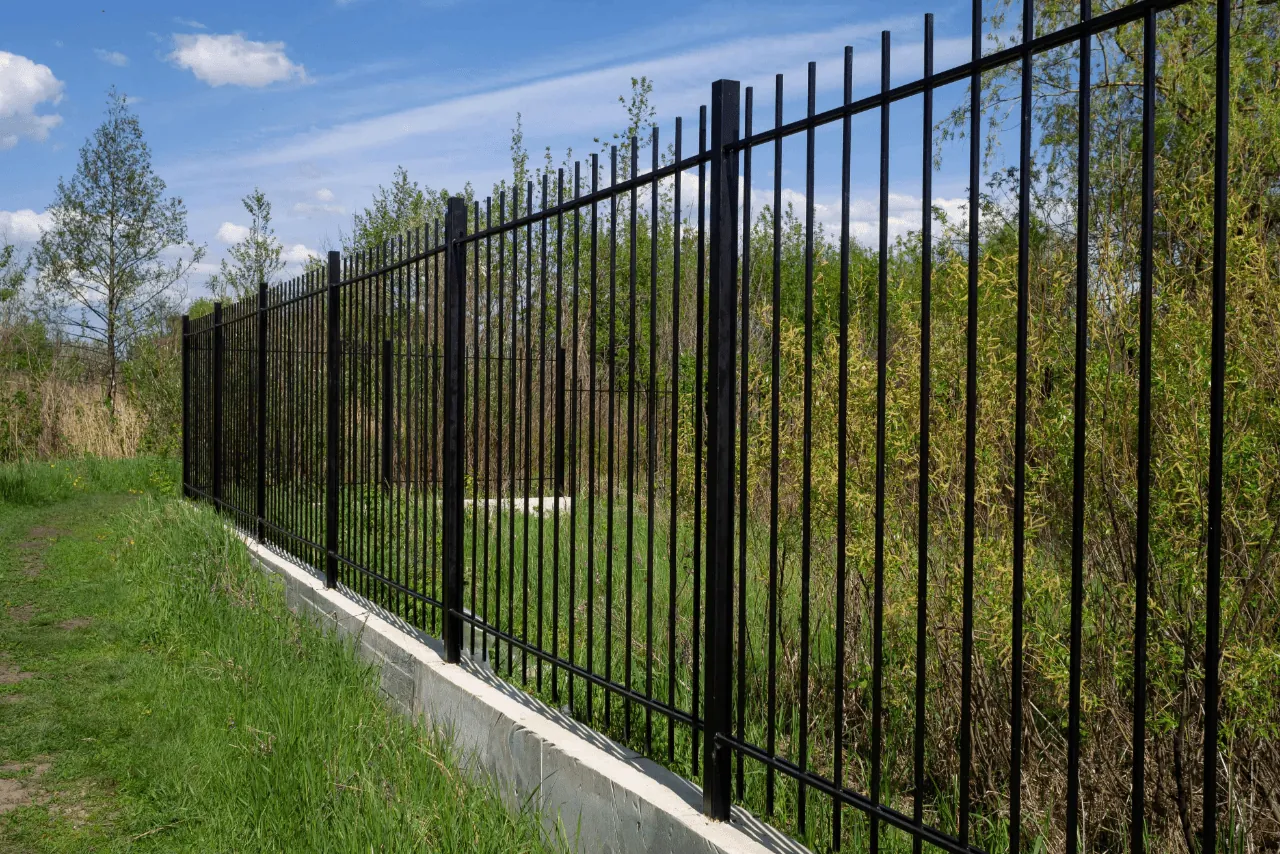
Walk the fence once in a while. Gates should still latch. A storm can move a section or pile debris against a gate.
A simple monthly look
- Cover is intact and reasonably clear of leaves and branches
- Cover pump is in place, powered as designed (often a GFCI outlet), and the hose is open
- No deep standing puddle on a solid or automatic cover
- Water level under an automatic cover still looks in range
- Fence and gate still work
- Nothing obvious is leaking at the pad or under the cover
When to call
Call if the cover has come loose, the pump has failed and water is building, you suspect a leak, a limb has landed on the system, or the ice and the sag make you unsure it's safe. [NEEDS INFO: who takes winter service calls, Legacy, P&W, or both.]
If you're planning a new pool, pick a cover with this winter in mind, not just July. We can walk through that in a consultation.
FAQs
How often should I check a closed pool?
After major storms, and at least during thaw periods. A monthly look is a reasonable minimum in this climate.
Is ice on the cover normal?
Yes. The problem is a heavy pond of water, or someone breaking ice off the fabric. Let it melt and pump off, if that's the designed method.
Can I run the pool pump in winter to keep water moving?
Not if the system was winterized. Restarting a drained or blown-out pad can damage equipment. Ask before you change that plan.
What about animals or kids on the cover?
A cover is a safety layer, not a play surface. Keep the fence secured and follow the manufacturer on walking on the cover.
