
A practical opening sequence for this climate, from the cover coming off to the equipment pad.
Written by the crew at Legacy Backyards in Lincoln. [NEEDS INFO: author name and credentials, or who on the team should be named as the reviewer.]
Open the pool after the hard freeze risk has eased, and only when you can keep up with the chemistry. Around here that's usually mid to late spring, but it follows the year, not the calendar. Clear the cover first. Then put the winterized equipment back together, bring the water up, circulate, and test before anyone swims. If you have an automatic cover, do not run it until the water, snow, and ice are off the fabric. Check your cover and equipment manuals. This is how we think about an opening, not a substitute for those instructions.
Closing this fall? See how we close a pool, winter care, and the cover pump.
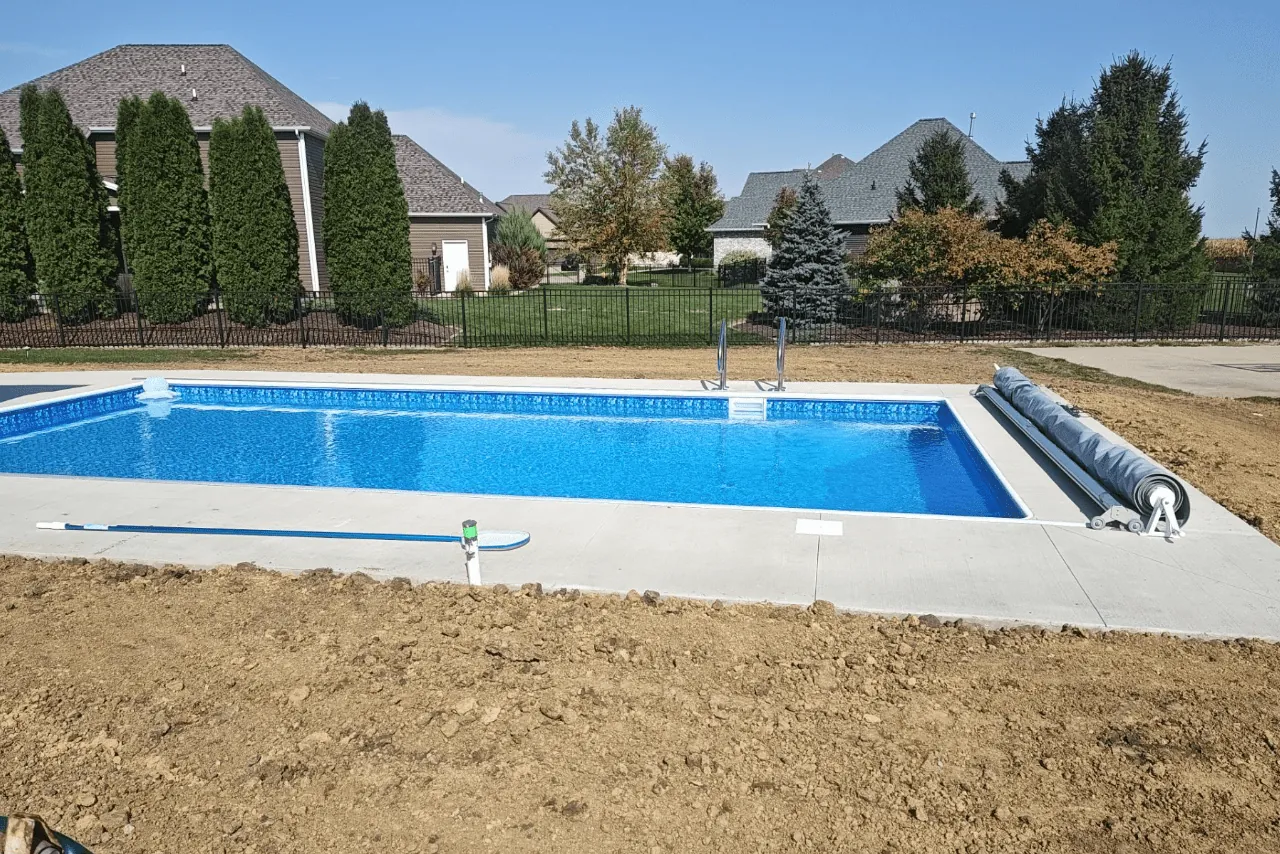

When we open around here
Central Illinois spring is uneven. You'll get a warm week, then a freeze. Open too early and you're fighting debris and chemistry you aren't ready to maintain. Wait too long under a dirty cover and the cleanup gets worse. We look for a stretch of settled weather when the system can run regularly.
[NEEDS INFO: the opening window we actually tell customers, and whether Legacy or P&W still does professional openings. A short, approved note about a typical spring (no addresses) would help this section.]
Pollen comes on strong some years. If you can get the cover off before that, you save yourself a lot of green water. That's a habit we'd rather keep than a guarantee.
Get the cover off without dumping winter into the pool
Work from the top down.
Automatic safety covers. Get the leaves and standing water off first. Use the cover pump if you have one. Do not operate the cover with water, snow, or ice on it. That's a common manufacturer warning, and we treat it as a hard rule. See our cover pump notes. Once the fabric is clear, open it from the keypad or switch. Then look at the tracks, the ropes or cables, and the motor. Run it a few times. If the leading-edge bar was lowered for winter, set it back to the operating height the way the manual says.
Mesh or solid safety covers. Pump or bail standing water off a solid cover. Get as much debris off as you can before you unstrap it. Clean it, let it dry, and store it where it won't mildew or tear. Mesh lets some water and light through, so don't be surprised if there's more algae or junk underneath.


Put the pad back together and look it over
Winter here is hard on pumps, filters, heaters, and lines. Before you start anything:
- Find the plugs, gizmos, and fittings you bagged at closing. Keep them together for next fall.
- Put the plugs and fittings back in, plus the pump basket and skimmer basket.
- Set the valves and the filter for normal operation.
- Look for cracked fittings, loose unions, tired O-rings, and hoses that got chewed or flattened.
- Prime the pump the way the manufacturer says. Don't start it dry.
If you've got a salt cell, clean it if it was pulled or stored, and don't expect it to run right until the water is circulating and in range. If you have a sanitizer or an automation system, power it up, check the tubing, and make sure the pump, valves, heater, and lights look right in the app or on the controller. Then follow that manufacturer's startup steps.
Listen to the pump on the first run. Watch for leaks. If it sounds wrong, shut it down.
Fill, circulate, and get the water in shape
Skim what's floating. Fill so the water sits a little above the middle of the skimmer at first. You can discharge or backwash later to hit a normal level. Watch the filter pressure.
Test before you start dumping product in. Get pH, alkalinity, and sanitizer in range. Only treat metals or phosphates if the test says you need to. An opening kit is a convenient box of the basics. Use it by the label, not instead of a test.
Let it circulate long enough to mix. Green or cloudy water after a mesh-cover winter is common. Circulation, sanitizer, and filtration usually clear it. One heavy shock dose is not a plan by itself. If the water is a mess or you're not comfortable with the chemistry, call a pro.
Don't start chasing a swimming temperature until the system is leak-free and circulating the way it should.
Walk the pool and the yard
Look at the interior, whether that's gel coat, a liner, or a finish. Check the deck, the coping, and the fence gates and latches. Make sure the cover runs clean and isn't still holding debris. Walk the pad again after it's been running a few hours.
Then do a normal first week: skim, empty the baskets, watch the pressure, retest the water.
When to call us (or another pro)
Call if something is cracked, the cover won't run, you have a serious leak, the liner looks wrong, or the water won't clear. [NEEDS INFO: who currently handles openings and service, Legacy, P&W, or both, and how we should say that.]
If you're planning a new pool for a coming season, start with a conversation now. Don't wait and hope for a last-minute spring install. Wet springs around here can sit in a hole for a while.
FAQs
Can I open the pool myself?
Plenty of homeowners do, if they follow the manuals and they're comfortable testing the water. If something looks damaged, stop and call.
How do I open an automatic cover in the spring?
Clear the water and debris first, then run the cover. Don't run it with ice or a puddle on the fabric. Check the manufacturer's instructions.
Why is the water green under a mesh cover?
Light and water get through, so algae can grow. Circulation, cleaning, and sanitizer usually handle it. A bad case may need a pro.
When should I turn on a salt system or the heater?
After the system is circulating, you've checked for leaks, and the water is in the range the manufacturer calls for. Starting either one too early is a common way to have a long day.
